Friday, August 9, 2013

The Legacy of John Graves


 Graves, photographed at Hard Scrabble on May 31, 2010, taken from Texas Monthly

Last Wednesday, July 31, Texan author John Graves passed away. He died at his home, Hard Scrabble, outside Glen Rose, Texas. He was 92.

Deemed “the best-loved writer in Texas and one of the least-known beyond the state lines” by writer Rick Bass in an article in Garden and Gun Magazine, John Graves authored many books and manuscripts, including his most famous book, Goodbye to a River.

Goodbye to a River established Mr. Graves as a giant in Texas letters and one of the nation’s more elegant prose stylists. The book was inspired by a trip Graves took down the Brazos River in 1957.

From Goodbye to a River: “Most autumns, the water is low from the long dry summer, and you have to get out from time to time and wade, leading or dragging your boat through trickling shallows from one pool to the long channel-twisted pool below, hanging up occasionally on shuddering bars of quicksand, making six or eight miles in a day’s work, but if you go to the river at all, you tend not to mind.” 

In the TAMU Press book Exploring the Brazos River: From Beginning to End, author Jim Kimmel was inspired by Graves’s journey down the long, changeable river, and followed the same stretch made famous by John Graves. His book features explanations of the ecological process and the Brazos’ characteristics as well as captivating photography by Jerry Touchstone Kimmel.

Graves grew up in Fort Worth and graduated Phi Beta Kappa from Rice University. After graduating, Graves went away to fight with the Marines in the South Pacific.

Later, he got his master’s from Columbia and taught freshman English at the University of Texas and writing seminars at Texas Christian University. In an interview by Texas Monthly, Graves explained, “I knew pretty quick I would never be happy teaching. Writing is something I’ve always had to do. I learned that when I let it take hold of me, it would somehow get up on its tiptoes and take me where I was going.”

 
John had always been fascinated by Hemingway, similar to other writers of his generation. In the fifties, he set out for Spain to do all the things Hemingway did, fly-fish in the Pyrenees, watch bullfights, drink red wine with expatriates, write and publish.

After returning from Europe in 1955, Graves had no intention of returning to Texas right away. But when his father was dying of cancer in 1956, Graves came back to Texas for good.

Back in Texas, he met and married former New Yorker Jane Cole, who was working as a designer for Neiman Marcus in Dallas. The two of them took over a former farm Graves bought in 1970, where Graves built their house, Hard Scrabble.

In the interview, Jane explained their family life in Hard Scrabble: “Our idea was to teach the children that you can almost exist without a grocery store. We raised our own beef, froze our own fruit and vegetables in a huge freezer, milled our own flour. Except for salt and coffee and rice, we had everything right here. The girls raised and showed goats, milked them, helped them have babies. Goats were a big part of the girls’ lives. They carried them up to the house in cardboard boxes when they were newborns, bottle-fed them every four hours, sometimes took them to bed with them.”

Hard Scrabble is where John Graves spent the rest of his life: working, writing, and being inspired. On learning how to write a novel, Graves explained, “Everything you read goes into you,” he explained. “The style goes into you too, and then when it comes back out again, in your own writing, it’s yours…”
--Madeline Loving

Tuesday, August 6, 2013

Great Swimming Holes in Texas CCC Parks


Looking for something fun to do with what's left of the summer months? We have a suggestion—visit a CCC park, and enjoy one of summertime’s favorite pastimes: swimming!
 

You can keep cool during the hottest month of the summer exploring and jumping into some of the best swimming holes in Texas CCC Parks.
Who were the Texas CCC (Civilian Conservation Corps)? With an enrollment of around 50.000 men, the Texas CCC constructed trails, cabins, concession buildings, bathhouses, dance pavilions, a hotel and a motor court between the years of 1933-1942. Before they arrived, the state’s parklands consisted of 14 parks on about 800 acres, but by the end of World War II, CCC workers had helped create a system of 48 parks on almost 60,000 acres throughout Texas.
Director of the historic sites and structures program at the Texas Parks and Wildlife Department in Austin and author Cynthia Brandimarte has provided a few photos of what she thinks are the best places to beat the heat . Fifteen CCC Parks invite you to swim in a lake, river or creek, while six CCC parks treat you to their own swimming pools.
Feel free to browse Cynthia’s picks, or read more about her book Texas State Parks and the CCC: The Legacy of the Civilian Conservation Corps (TAMU Press, 2013) here!
 Possum Kingdom

Bonham State Park
Inks Lake
 --Madeline Loving

Tuesday, July 30, 2013

They Called Him a Traitor


http://www.youtube.com/watch?v=7zA0Ll2xphQ
 
In 2010, Julian Assange became "public enemy number one" in the United States for posting material on the Internet concerning airstrikes in Iraq, U.S. diplomatic communications and other sensitive matters.

A new movie produced by Stephen Spielberg's DreamWorks, The Fifth Estate, will focus on the controversial website and the disintegration of the relationship between founder Assange and former spokesman Daniel Domscheit-Berg.

The film will debut at the 2013 Toronto Film Festival in October.

Among the classified information leaked on WikiLeaks were U.S. military videos of 2007 combat actions in Baghdad that had resulted in the deaths of two Reuters news staff -- a release that immediately sparked a storm of controversy.

The WikiLeaks controversy was not unprecented. The addition of digital cameras on cell phones, for example, as well as software apps that allow for photos or video to be uploaded to social networking sites like Facebook and Flickr or distributed via email has been a boon to street reporting.

During 2006 military operations in Lebanon, Israeli conscripts filled the Internet with personal photographs and videos -- some compromising the security of ongoing operations. Others were used by Hezbollah forces fighting them to generate anti-Israeli propaganda.

In his book Wiki at War: Conflict in a Socially Networked World, author James Carafano discusses WikiLeaks, social media and street-reporting tactics enabled by Web 2.0.

"While street journalism and blogging can be powerful weapons in the hands of bad people, both have been enlisted in the fight for freedom," says Carafano. "States such as Iran and China have pioneered efforts to keep the voices of freedom off-line. In some cases citizens have fought back."

Carafano, deputy director of the Heritage Foundation's international studies institute and director of its Center for Foreign Policy Studies, says the war for winning dominance over social networks and using that dominance to advantage is already underway.

For more information on Wiki at War, click here.

Monday, July 29, 2013

Fighting Fire with Fire

Before people replaced wilderness with homes and ranches, wildfires were essential to the American West. Plains and prairies burned regularly, and those fires not only determined the flora and fauna that made up the ecosystem, but they regenerated the land.

Now scientists are trying to bring fire back to the land, though they are finding that many humans do not understand the purpose.
 

"I know that every time we've done burns we get a lot of calls to the fire department, people saying, 'Oh, no, why would you do that?'" Grace Stanley of the Montana Conservation Corps told NPR. "People don't really understand that fire regenerates, and it's a natural process that the earth needs."
In Montana government decided to stop all wildfires a century ago -- a move that upset the balance of the ecosystem. Now, scientists are doing controlled burns to burn off high grass and undergrowth, which are often fuel for out-of-control wildfires that burn everything in their wake.

For more information on controlled fires and Montana's efforts to prevent wildfires and promote regenerative growth, read the story on NPR.

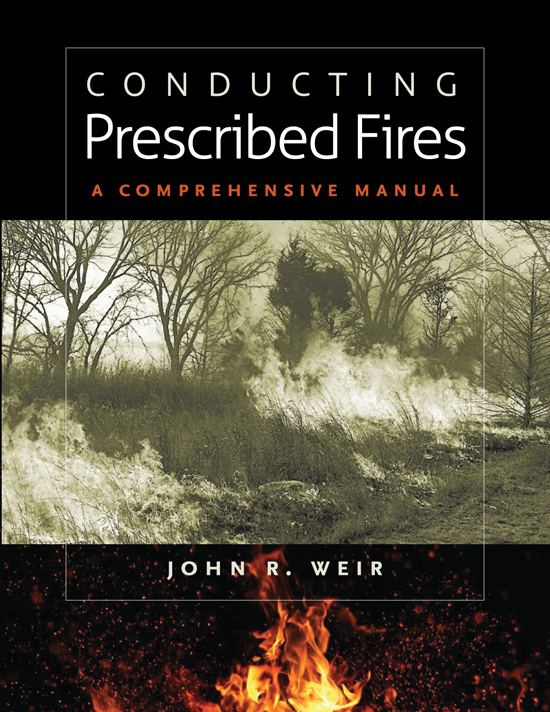
Texas A&M University Press offers a comprehensive guide for controlled burns, aimed directly to landowners and other professionals. For more information on Conducting Prescribed Fire: A Comprehensive Manual, click here.


Friday, July 26, 2013

On the Trail of Tom Lea

Artist, muralist, author, and war correspondent Tom Lea made his mark on Texas history and left a trail of artwork for people to follow. Although the Tom Lea Trail is not officially designated, following it requires a rambling traverse of the entire state. From El Paso to Dallas to Austin and south to Kingsville, Lea’s artwork and murals can be found spread across the state. Using his artist brush and writer’s pen, Tom Lea commanded his bit of Texas history without a bayonet or musket or the title of a military commander.

Beginning in El Paso where Tom Lea was born, you can find the mural that solidified Lea’s reputation as a Texas muralist and draftsman. The mural’s location, a wall 12 feet high and 53 feet long in the El Paso federal courthouse, proved a good canvas for Lea to use. It was there that Lea painted his first true masterwork—Pass of the North. The desert-landscape background includes larger-than-life figures such as a U.S. soldier, a Franciscan priest, a Mexican vaquero, a Spanish explorer, pioneer settlers, Apaches, a Texas rancher, a prospector, and a town sheriff.

Born in 1907, Lea expressed an interest for the arts throughout childhood. When he was 18, Lea left El Paso for the Art Institute of Chicago where he accomplished two years of formal training, as well as a five-year apprenticeship with Chicago muralist John Norton. When Lea returned to El Paso, he was already an accomplished artist.

Moving up north to Dallas is the extravagant Hall of State built to house the exhibits of the 1936 Texas Centennial Exposition. Lea was among several artists commissioned to decorate the interior. Now you can find Lea’s History of Beef Cattle paintings at the Dallas Museum of Art.


(Stampede Mural, 1940, Post Office, Odessa, Texas)
Traveling south you will find examples in Austin, including a full-color oil called The Lead Steer at the Blanton Museum of Art as well as A Little Shade in Waco’s Texas Ranger Hall of Fame. The iconic cowboy continued to dominate Lea’s subject matter.

Further south, the UT Galveston Moody Medical Library houses Lea’s The First Recorded Surgical Operation in North America, Cabeza de Vaca. The skillful hand of Lea brings to life the Spanish explorer removing a flint arrowhead from the wounded chest of a Native American.

Lea was also a published author. His best-selling novel titled The Brave Bulls was published in 1948. In 1951 it was made into a movie starring Mel Ferrer and Anthony Quinn. Another of Lea’s novels is titled The Wonderful Country  and  is published by TCU Press.

A few other books focusing on Tom Lea and his artwork are listed below:

1. Texas Post Office Murals: Art for the People (TAMU Press, 2004) by Philip Parisi is a volume full of 115 photographs that depict the stunning and historic works of art that grace the walls of any of the sixty post offices and federal buildings in the state of Texas.

2. The Two Thousand Yard Stare: Tom Lea’s World War II (TAMU Press, 2008) by Tom Lea and Edited by Brendan M. Greeley Jr., features Lea’s firsthand accounts of his experience during World War II when he was commissioned by Life magazine to paint the war as it was happening.

3. The Art of Tom Lea: A Memorial Edition (TAMU Press, 2003)  by Kathleen G. Hjerter makes available the full range of his vigorous work. Old admirers of Lea’s talents will delight in this presentation, and a whole new generation will be awed by the unique contribution he has made.

4. Literary El Paso (TCU Press, 2009) edited by Marcia Hatfield Daudistel brings attention to the often overlooked extraordinary literary heritage of this city in far West Texas. The works of Tom Lea and many other artists are featured in the book as well.
If you would like to read the original article featuring Tom Lea, click here for a link to Texas Highways.


--Madeline Loving


Monday, July 22, 2013

Bomber Bats?

Believe it or not, that was the directive from the White House as the U.S. tried to develop secret weapons during World War II.


On December 7, 1941, when the Japanese bombed Pearl Harbor, Lytle S. Adams was visiting Carlsbad Caverns in New Mexico. As the implications of Japan’s act began to sink in, Adams’s thoughts turned to retaliation.


Adams was amazed by the hundreds of thousands of bats that emerged from and returned to the caverns every night and wondered if they couldn't be used as weapons—fitted with incendiary devices and dropped from planes. He realized that if bats could be “weaponized,” they could be released to roost before sun up, when built-in timers would ignite the incendiaries, creating thousands of fires simultaneously.


By January 1942, Adams’s idea made it to President Franklin Roosevelt’s desk, and within days, Roosevelt had dispatched instructions regarding the plan to an Army colonel. Roosevelt wrote, “It sounds like a perfectly wild idea but is worth looking into.”


The “bat bomb” project was soon off the ground, and the effort appeared promising. Bats generally congregated in large numbers, could carry twice their weight in flight, would fly in darkness and roost in secluded places and, perhaps most important, could be manipulated to hibernate and, while dormant, did not require food or maintenance.


By March 1943, the Mexican free-tailed bat had been chosen for the operation, and Louis Fieser was designing miniature incendiary devices for the bombers. The bats were being collected from large caves in Texas.


Two months later, 3,500 bats were tested in California but even after several failed attempts, testing continued with mixed results.


By early June, the bat bombers had burned down the new Carlsbad Airfield’s control tower, a barracks and several other buildings, all while in various stages of construction. They soon realized they had a lot of additional developments to make before a final conclusion could be drawn.


In August 1943, the project was passed on to the Navy and assigned to the Marine Corps thus becoming known as Project X-Ray. An incendiary specialist at Dugway reported that the bat bombers were effective because the small units were capable of creating a reasonable number of destructive fires without being detected. A National Defense Research Committee observer concurred, concluding that Project X-Ray had indeed produced an effective weapon.


After some positive results and optimistic accounts, more advanced and effective incendiary devices were ordered and an expanded Project X-Ray test regimen was scheduled for August 1944. But by then, Project X-Ray was racing against the Manhattan Project, and when Navy Fleet Adm. Ernest J. King was informed that the bat bombers would probably not be combat ready until mid-1945, he canceled the project.


For the original article from Texas Co-op Power magazine, click hereFor more on Texas bats, check out Loren Ammerman’s book Bats of Texas.


-Paige Bukowski