Tuesday, October 15, 2013

Exhibit to Feature Images from Ranching Book, Renowned Photographer


Texas A&M AgriLife will open an exhibit of 12 images – poster reproductions of fine art photography from the pages of Hillingdon Ranch: Four Seasons, Six Generations – Wednesday.

The exhibit, which will remain open through Nov. 11, is on display in the AgriLife Center, located at 556 John Kimbrough Boulevard. The center is open 8 a.m. to 5 p.m. weekdays.

The images captured by Hillingdon Ranch coauthor David Langford depict seasonal views of the sprawling, 13,000-acre family ranch on the outskirts of Comfort, Texas.

Published by Texas A&M University Press, Hillingdon Ranch is a beautifully photographed portrait of a ranching family and their life in the Texas Hill Country. The book chronicles what the Gile’s family’s efforts mean to the rest of us: food, fiber, clean air, wildlife, healthy land, peace and quiet and, perhaps most of all, clean and plentiful water.

The book has received critical praise from Mrs. Laura Bush, Former First Lady of Texas and the U.S.; Nolan Ryan, member of the Baseball Hall of Fame, rancher, and former Texas Parks and Wildlife Commissioner; and George Strait, member of the Country Music Hall of Fame and rancher.
Langford is the owner of Western Photography Company. His award-winning photographs have appeared in Smithsonian, Outdoor Life,Field and Stream, Texas Highways, The Cattleman, American West, Texas Monthly and other publications, worldwide. He lives on the Laurels Ranch, his piece of the Hillingdon family land.


Coauthor Lorie Woodward Cantu is president of Woodward Communications, a research, writing and public relations company specializing in agriculture and natural resource issues. Before starting her own business, Cantu was the assistant commissioner for communications at the Texas Department of Agriculture.

Tuesday, October 1, 2013

Book on the USS Tate Gave Reader Glimpse of Father's Life in Service


It had been three years since author Tom Crew received feedback on his book Combat Loaded: Across the Pacific on the USS Tate when he received a glowing reader letter from Verne P. Dalton.


"It is with great appreciation that I send you my thanks for your book Combat Loaded," wrote Dalton.


Dalton said his appreciation of the book stemmed from the fact that Crew's story represents a part of America's military history that has been ignored.

"While it's understandable that 'fighting ships' and 'fighting men' get more attention than freighters and porters, battles can't be waged without logistical support," said Dalton. "I believe your book gave a sense of that."

Dalton said he also appreciated the book for its detailed account of both the technical side of the operation and its intrinsic human component.

"Your descriptions and explanations and inclusions of photos, maps and charts should give any student of World War II or 20th Century naval warfare an excellent view of the role an AKA or other transport ship of this time."

In closing, Dalton thanked Crew for giving him a glimpse of the life of his father during his service. For years Dalton wished that someone would write the story of any AKA so he could speculate what his life aboard ship would have been like, wrote Dalton.

Crew's book is the first authoritative history of any of the more than 350 attack transports or attack cargo ships of World War II, with combat narratives alongside details of daily life on board the ships of Tranport Squadron 17 during the waning days of World War II.


For more on Combat Loaded, click here. (link to book on website)


Researchers Say Texas Not Prepared for Next Hurricane


In the aftermath of Hurricane Ike -- which caused more than $30 billion and killed more than 30 people -- cities across the region have boasted about their rebuilding efforts.


But this week experts with Rice University's Severe Storm Prediction, Education and Evacuation from Disasters Center said preparedness efforts may have even worsened in the last few years, due in part to growth in the Houston Channel that is occurring without appropriate hurricane safeguards.


Exports for the state of Texas -- which have prompted the dramatic growth of industry in the Houston Ship Channel -- have exceeded even those of New York City. While the growth is an economic engine for the state, some researchers worry that a direct-hit hurricane would wreak havoc on the channel's chemical and oil storage tanks, leading to spills and an environmental catastrophe.


Researchers with the SSPEED Center say if Hurricane Ike made everyone realize just how exposed and vulnerable the Houston-Galveston area is in the face of a major storm. If the hurricane had made landfall just 50 miles down the Texas coast, the devastation and death caused by what was already one of the most destructive hurricanes in U.S. history would have quadrupled.


In a book written and edited by the research center, Lessons from Hurricane Ike, Director Phil Bedient and his research team say Ike made everyone realize just how exposed and vulnerable the Houston-Galveston area is in the face of a major storm.


The book gathers the work some of the premier researchers in the fields of hurricane prediction and impact, summarizing it in accessible language accompanied by abundant illustrations -- not just graphs and charts -- but dramatic photos and informative maps.


Check it out here (link to book's page on website).


Read more about the recent discussion of hurricane preparedness in Texas Tribune.


Friday, August 9, 2013

The Legacy of John Graves


 Graves, photographed at Hard Scrabble on May 31, 2010, taken from Texas Monthly

Last Wednesday, July 31, Texan author John Graves passed away. He died at his home, Hard Scrabble, outside Glen Rose, Texas. He was 92.

Deemed “the best-loved writer in Texas and one of the least-known beyond the state lines” by writer Rick Bass in an article in Garden and Gun Magazine, John Graves authored many books and manuscripts, including his most famous book, Goodbye to a River.

Goodbye to a River established Mr. Graves as a giant in Texas letters and one of the nation’s more elegant prose stylists. The book was inspired by a trip Graves took down the Brazos River in 1957.

From Goodbye to a River: “Most autumns, the water is low from the long dry summer, and you have to get out from time to time and wade, leading or dragging your boat through trickling shallows from one pool to the long channel-twisted pool below, hanging up occasionally on shuddering bars of quicksand, making six or eight miles in a day’s work, but if you go to the river at all, you tend not to mind.” 

In the TAMU Press book Exploring the Brazos River: From Beginning to End, author Jim Kimmel was inspired by Graves’s journey down the long, changeable river, and followed the same stretch made famous by John Graves. His book features explanations of the ecological process and the Brazos’ characteristics as well as captivating photography by Jerry Touchstone Kimmel.

Graves grew up in Fort Worth and graduated Phi Beta Kappa from Rice University. After graduating, Graves went away to fight with the Marines in the South Pacific.

Later, he got his master’s from Columbia and taught freshman English at the University of Texas and writing seminars at Texas Christian University. In an interview by Texas Monthly, Graves explained, “I knew pretty quick I would never be happy teaching. Writing is something I’ve always had to do. I learned that when I let it take hold of me, it would somehow get up on its tiptoes and take me where I was going.”

 
John had always been fascinated by Hemingway, similar to other writers of his generation. In the fifties, he set out for Spain to do all the things Hemingway did, fly-fish in the Pyrenees, watch bullfights, drink red wine with expatriates, write and publish.

After returning from Europe in 1955, Graves had no intention of returning to Texas right away. But when his father was dying of cancer in 1956, Graves came back to Texas for good.

Back in Texas, he met and married former New Yorker Jane Cole, who was working as a designer for Neiman Marcus in Dallas. The two of them took over a former farm Graves bought in 1970, where Graves built their house, Hard Scrabble.

In the interview, Jane explained their family life in Hard Scrabble: “Our idea was to teach the children that you can almost exist without a grocery store. We raised our own beef, froze our own fruit and vegetables in a huge freezer, milled our own flour. Except for salt and coffee and rice, we had everything right here. The girls raised and showed goats, milked them, helped them have babies. Goats were a big part of the girls’ lives. They carried them up to the house in cardboard boxes when they were newborns, bottle-fed them every four hours, sometimes took them to bed with them.”

Hard Scrabble is where John Graves spent the rest of his life: working, writing, and being inspired. On learning how to write a novel, Graves explained, “Everything you read goes into you,” he explained. “The style goes into you too, and then when it comes back out again, in your own writing, it’s yours…”
--Madeline Loving

Tuesday, August 6, 2013

Great Swimming Holes in Texas CCC Parks


Looking for something fun to do with what's left of the summer months? We have a suggestion—visit a CCC park, and enjoy one of summertime’s favorite pastimes: swimming!
 

You can keep cool during the hottest month of the summer exploring and jumping into some of the best swimming holes in Texas CCC Parks.
Who were the Texas CCC (Civilian Conservation Corps)? With an enrollment of around 50.000 men, the Texas CCC constructed trails, cabins, concession buildings, bathhouses, dance pavilions, a hotel and a motor court between the years of 1933-1942. Before they arrived, the state’s parklands consisted of 14 parks on about 800 acres, but by the end of World War II, CCC workers had helped create a system of 48 parks on almost 60,000 acres throughout Texas.
Director of the historic sites and structures program at the Texas Parks and Wildlife Department in Austin and author Cynthia Brandimarte has provided a few photos of what she thinks are the best places to beat the heat . Fifteen CCC Parks invite you to swim in a lake, river or creek, while six CCC parks treat you to their own swimming pools.
Feel free to browse Cynthia’s picks, or read more about her book Texas State Parks and the CCC: The Legacy of the Civilian Conservation Corps (TAMU Press, 2013) here!
 Possum Kingdom

Bonham State Park
Inks Lake
 --Madeline Loving

Tuesday, July 30, 2013

They Called Him a Traitor


http://www.youtube.com/watch?v=7zA0Ll2xphQ
 
In 2010, Julian Assange became "public enemy number one" in the United States for posting material on the Internet concerning airstrikes in Iraq, U.S. diplomatic communications and other sensitive matters.

A new movie produced by Stephen Spielberg's DreamWorks, The Fifth Estate, will focus on the controversial website and the disintegration of the relationship between founder Assange and former spokesman Daniel Domscheit-Berg.

The film will debut at the 2013 Toronto Film Festival in October.

Among the classified information leaked on WikiLeaks were U.S. military videos of 2007 combat actions in Baghdad that had resulted in the deaths of two Reuters news staff -- a release that immediately sparked a storm of controversy.

The WikiLeaks controversy was not unprecented. The addition of digital cameras on cell phones, for example, as well as software apps that allow for photos or video to be uploaded to social networking sites like Facebook and Flickr or distributed via email has been a boon to street reporting.

During 2006 military operations in Lebanon, Israeli conscripts filled the Internet with personal photographs and videos -- some compromising the security of ongoing operations. Others were used by Hezbollah forces fighting them to generate anti-Israeli propaganda.

In his book Wiki at War: Conflict in a Socially Networked World, author James Carafano discusses WikiLeaks, social media and street-reporting tactics enabled by Web 2.0.

"While street journalism and blogging can be powerful weapons in the hands of bad people, both have been enlisted in the fight for freedom," says Carafano. "States such as Iran and China have pioneered efforts to keep the voices of freedom off-line. In some cases citizens have fought back."

Carafano, deputy director of the Heritage Foundation's international studies institute and director of its Center for Foreign Policy Studies, says the war for winning dominance over social networks and using that dominance to advantage is already underway.

For more information on Wiki at War, click here.

Monday, July 29, 2013

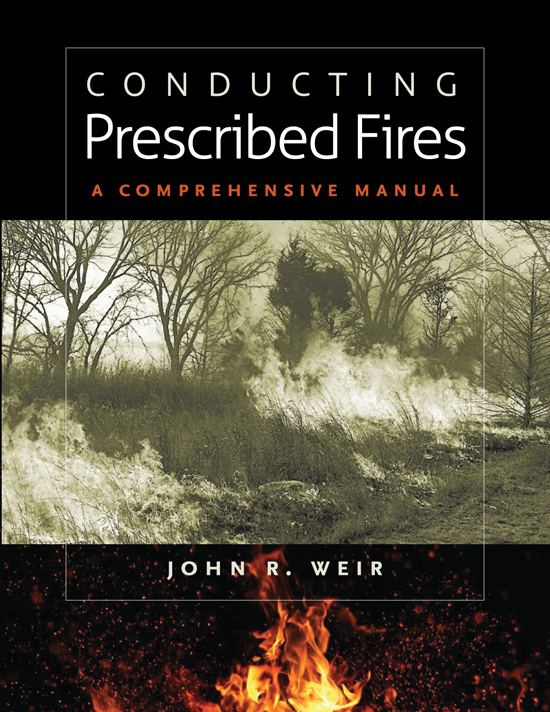
Fighting Fire with Fire

Before people replaced wilderness with homes and ranches, wildfires were essential to the American West. Plains and prairies burned regularly, and those fires not only determined the flora and fauna that made up the ecosystem, but they regenerated the land.

Now scientists are trying to bring fire back to the land, though they are finding that many humans do not understand the purpose.
 

"I know that every time we've done burns we get a lot of calls to the fire department, people saying, 'Oh, no, why would you do that?'" Grace Stanley of the Montana Conservation Corps told NPR. "People don't really understand that fire regenerates, and it's a natural process that the earth needs."
In Montana government decided to stop all wildfires a century ago -- a move that upset the balance of the ecosystem. Now, scientists are doing controlled burns to burn off high grass and undergrowth, which are often fuel for out-of-control wildfires that burn everything in their wake.

For more information on controlled fires and Montana's efforts to prevent wildfires and promote regenerative growth, read the story on NPR.

Texas A&M University Press offers a comprehensive guide for controlled burns, aimed directly to landowners and other professionals. For more information on Conducting Prescribed Fire: A Comprehensive Manual, click here.